Global buyers are rethinking outdoor furniture as climate exposure, shipping costs, and maintenance demands increase. Aluminum Furniture Sets offer a practical response. They are lightweight, corrosion-resistant, and easier to move than steel or solid wood. A dining table can cross a patio without heavy lifting. A powder-coated frame can also support consistent color across hospitality projects.
Market evidence supports this shift. Grand View Research valued the global outdoor furniture market at approximately USD 19.5 billion in 2023. It also projects continued growth through 2030, driven by residential upgrades, hotels, and commercial outdoor spaces. Meanwhile, the International Aluminium Institute expects global aluminum demand to rise significantly by 2050. These reports do not measure furniture alone, so their relevance requires careful interpretation. Still, they reveal stronger long-term demand for adaptable aluminum products.
The material also supports circular design. The International Aluminium Institute states that most aluminum ever produced remains in use today, reflecting its recyclability and long service potential. However, recycling claims should not be accepted blindly. Coatings, mixed materials, poor collection systems, and transport distances can reduce real-world benefits. Experienced buyers should request alloy specifications, coating standards, load testing, warranty terms, and documented supply-chain information. These details matter more than attractive showroom photos. Aluminum is not perfect. Thin frames may dent, darker finishes can heat in direct sun, and low-grade hardware may fail first. Yet, with verified construction and suitable design, Aluminum Furniture Sets can balance durability, appearance, logistics, and lifecycle value for international markets.
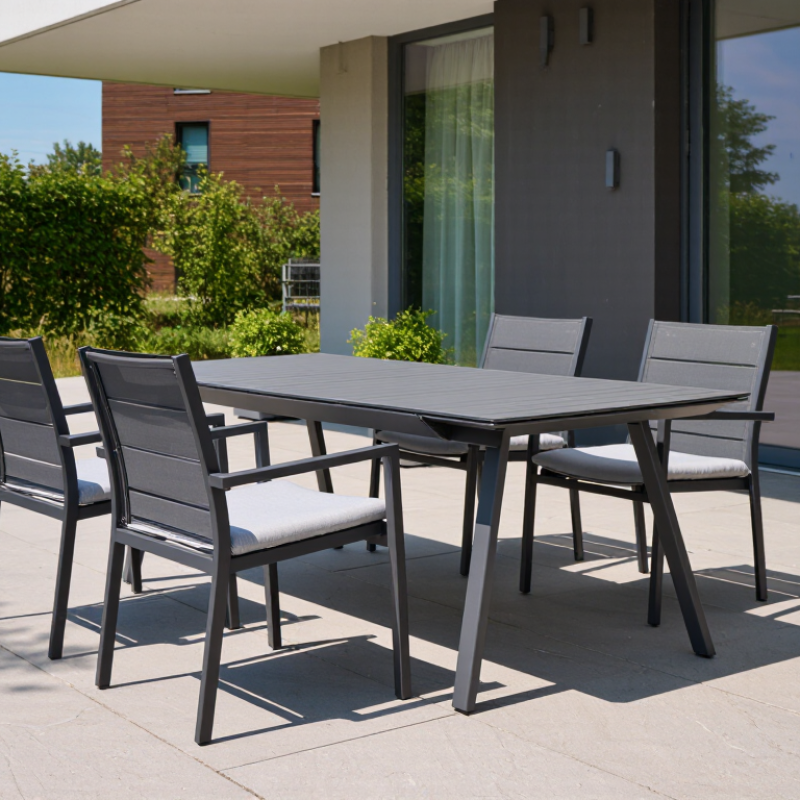
Aluminum furniture sets are coordinated groups of outdoor chairs, tables, loungers, or benches built around a shared design. Their frames usually use aluminum tubing, cast parts, or formed sheets. This metal offers low weight, strong corrosion resistance, and easier handling during installation. For global buyers, those qualities matter when products travel through humid ports, dry interiors, or coastal climates.
Design begins with use, not appearance alone. Engineers check tube thickness, joint strength, load capacity, and drainage points. Designers then shape the set around comfort, stacking, and available space. Powder-coated surfaces can add color and protection, while stainless-steel fasteners help reduce rust staining. Seats may include textilene, cushions, wood-like panels, or molded supports. Each material changes maintenance needs. A practical set should also arrive with clear assembly instructions and replaceable hardware.
Real projects reveal details that drawings miss. A chair can look refined but feel unstable on uneven paving. A table may resist rain yet collect water inside its frame. These are design weaknesses worth testing early. Buyers should request material specifications, coating information, safety testing, and care guidance. Independent quality checks improve confidence, although no finish remains perfect forever. Aluminum can dent, coatings can fade, and loose joints need attention. Good design leaves room for repair, cleaning, and honest improvement.
For global buyers, aluminum furniture offers a practical balance of weight, durability, and design flexibility. A table frame can be lifted by two workers, reducing handling strain during installation. That matters when products travel through several warehouses before reaching a hospitality project. Aluminum also resists rust better than ordinary steel in humid coastal environments. Still, material choice alone is not enough.
Experienced purchasers should inspect alloy specifications, weld quality, coating thickness, and hardware compatibility. A sound powder coating helps protect surfaces from sunlight, rain, and repeated cleaning. Drainage holes prevent water from collecting inside hollow legs. Stainless or treated fasteners can reduce staining around joints. Testing should reflect the destination climate, from salty air to dry, intense heat. Suppliers with clear test reports and traceable production records are easier to assess. Ask for samples.
International buyers also value flat packing and predictable container loading. Lighter frames may lower freight emissions, although packaging can weaken that advantage. This is an easy detail to overlook. Aluminum is recyclable, but recovery depends on local collection systems and separated materials. Some low-cost finishes fade sooner than expected, especially under strong ultraviolet exposure. Field inspections can reveal loose joints after busy commercial use. That experience supports reviewing load ratings, maintenance instructions, and replacement parts carefully. The cheapest specification may not perform best.
Aluminum furniture suits global buyers because grade choice affects strength, weight, and service life. The 6063 alloy is widely used for extruded frames because it forms clean profiles and accepts anodizing well. The 6061 alloy offers higher strength, which helps larger tables and commercial seating resist bending. For coastal projects, 5052 sheet aluminum can provide better corrosion resistance. Still, alloy selection alone cannot prevent failure.
Finish matters just as much. Anodizing creates a hard oxide layer and keeps the metal’s texture visible. Powder coating offers broader color choices and a thicker protective film. Poor pretreatment, however, can cause peeling, especially around welds and fasteners. Buyers should request coating thickness, salt-spray results, and outdoor exposure data. A glossy sample proves little.
Performance data deserves careful reading. The International Aluminium Institute reports that recycled aluminum uses about 5% of the energy required for primary production. Its 2024 sector pathways report also emphasizes recycling as a major decarbonization lever. The U.S. Department of Energy similarly identifies recycled aluminum as a key energy-saving opportunity. These figures support aluminum’s sustainability case, but transport, coatings, packaging, and repair rates still affect the real footprint. Small details matter. Ask for alloy certificates, finish specifications, load testing, and warranty conditions. Weaker documentation remains a common purchasing risk.
Typical mechanical properties of widely used aluminum furniture grades
3003-H14 is commonly selected for lightweight formed components, while 5052-H32 offers higher strength and strong corrosion resistance for outdoor applications. 6061-T6 provides the highest strength of the three grades shown and is suitable for structural frames. Mill finish preserves the natural aluminum surface, anodizing improves surface hardness and corrosion resistance, and powder coating provides a broad range of colors and an additional protective layer. Values are typical minimum specifications in MPa and may vary according to product form, thickness, and applicable standards.
When evaluating aluminum furniture suppliers, inspect more than catalog photos. Ask for alloy grades, wall thickness, welding procedures, and coating specifications. A reliable supplier should provide test reports for corrosion resistance, load capacity, and color stability. Request a physical sample. Check its joints, drainage holes, surface finish, and packaging after transport.
Quality is measurable. The International Aluminium Institute reports that recycled aluminum requires about 5% of the energy used for primary aluminum production. Ask suppliers about recycled content and traceability, but verify their claims with documentation. The Global Outdoor Furniture Market reports also identify weather resistance and low maintenance as major purchasing factors. Powder coating should be tested for adhesion, humidity, and UV exposure. However, no finish performs perfectly in every climate. Salt air can still reveal weak preparation.
Tips: Compare three suppliers using one specification sheet. Require sample approval before mass production. Confirm carton dimensions, replacement-part support, and inspection procedures. Customization should include frame color, cushion fabric, dimensions, stacking design, and logo-free packaging when needed. Clarify minimum order quantities and mold charges in writing. A cheaper quote may hide thinner tubing or weaker welds. I have found that small details, such as uneven chair feet, often predict larger quality problems. Supplier evaluation is not foolproof, so independent pre-shipment inspection remains worthwhile.
For global buyers, aluminum furniture offers a practical balance of weight, strength, and service life. It is easier to handle than steel during warehouse transfers and final delivery. That can reduce lifting effort and, in some shipments, freight volume. Yet shipping estimates should use packed dimensions, not product weight alone. Protective corners, moisture barriers, and clear assembly instructions matter. A damaged carton can erase the savings quickly. I have seen buyers focus on unit price and overlook replacement-part logistics. That is an expensive lesson.
Aluminum does not rust like ordinary steel, but it is not maintenance-free. Salt air, standing water, and harsh cleaners can damage coatings or fasteners. Wipe surfaces with mild soap and fresh water. Dry joints and drainage points. Inspect screws every few months, especially after relocation. For long-term value, ask about coating quality, load testing, spare parts, and repair procedures. A durable frame is useful only when cushions, connectors, or finish repairs remain available. This detail is often missed.
Tips: Request a packed shipping sample or detailed carton data before ordering. Confirm the metal grade, coating process, warranty scope, and care instructions in writing. For coastal projects, schedule more frequent rinsing. Keep a small record of inspections. It sounds simple. It prevents guesswork. Buyers should also compare delivered cost, not the factory quote alone. Duties, port handling, inland transport, and local storage can change the final value. My own preference is to test one set first. Scaled orders are efficient, but early feedback can reveal comfort, assembly, and packaging problems that photographs hide.
They are coordinated outdoor groups with chairs, tables, loungers, or benches. Their frames use tubes, cast parts, or formed sheets. The pieces share a common design.
Aluminum is lightweight, corrosion-resistant, and easier to move than steel. This helps during warehouse handling and final delivery. It still needs care.
Design should begin with use, comfort, available space, and stability. Engineers should check tube thickness, joint strength, load capacity, and drainage. Appearance alone is not enough.
Seats may use cushions, textilene, molded supports, or wood-like panels. Powder-coated surfaces can add color and protection. Fasteners should resist staining and corrosion.
A chair may feel unstable on uneven paving. A table frame may collect water after rain. Photographs rarely show these problems.
Request metal grade, coating details, load tests, safety checks, and care instructions. Ask for packed carton dimensions, not product weight alone. Written details reduce guesswork.
No. Salt air, standing water, and harsh cleaners can damage finishes and fasteners. Wash surfaces with mild soap and fresh water. Dry the joints and drainage points.
Check screws every few months, especially after moving the furniture. Ask about spare parts, repair procedures, coating quality, and warranty coverage. A strong frame is only part of the value.
Protective corners, moisture barriers, and clear instructions help prevent carton damage. Duties, port handling, inland transport, and storage can change the delivered cost. The factory quote is incomplete.
Testing one set can reveal comfort, assembly, stability, and packaging weaknesses. Scaling up may save time, but early feedback matters. I would not trust photographs alone.
Aluminum Furniture Sets are a practical and versatile choice for global buyers seeking durable, lightweight, and attractive outdoor furnishing solutions. Designed with strong frames, comfortable components, and flexible configurations, they can suit patios, hotels, restaurants, gardens, and commercial projects. Aluminum offers excellent resistance to rust, moisture, and changing weather, while powder-coated or anodized finishes provide additional protection and allow buyers to select colors and surface effects that match different design requirements.
When evaluating suppliers, buyers should review aluminum grades, frame thickness, welding quality, coating consistency, load capacity, and available customization options. Reliable production standards, clear inspection procedures, and stable communication are also essential for international orders. Buyers should consider packaging, container utilization, shipping schedules, and after-sales support to reduce logistical risks. With simple cleaning and proper storage during extreme conditions, aluminum furniture can maintain its appearance and performance for many years, delivering strong long-term value and lower maintenance costs.

JIANGYIREN Furniture