Top 10 Teak Furniture Manufacturers for Global Buyers?

Time:2026-10-16 Author:Madeline
0%

Teak Furniture remains a strong choice for hospitality, residential, and outdoor projects worldwide. Its dense grain, natural oils, and warm golden color help it endure humid patios and busy dining spaces. Yet quality varies widely between factories. A polished showroom photograph proves very little.

The global furniture market reached approximately USD 516.66 billion in 2022, according to Grand View Research’s Furniture Market Report. The report also forecasts continued growth through 2030. This expansion creates more sourcing opportunities, but it increases the need for careful supplier evaluation. Buyers should examine kiln-drying methods, moisture levels, joinery, finishing systems, production capacity, and export experience. Small details matter. A poorly aligned mortise can become a costly repair after one rainy season.

This “Top 10 Teak Furniture Manufacturers for Global Buyers” overview combines practical purchasing criteria with public industry evidence. The FAO Global Forest Resources Assessment 2020 reports that forests cover about 31% of the world’s land area, highlighting the importance of responsible material sourcing. The International Tropical Timber Organization also emphasizes traceability and sustainable tropical timber management in its market reviews. Certification claims should therefore be checked through valid documentation, not accepted from a website alone.

No ranking can remove every uncertainty. Factory audits, sample inspections, and written specifications still matter. Some manufacturers communicate beautifully but disclose little. Others may have fewer marketing resources yet deliver stronger craftsmanship. This guide may not capture every regional specialist, but it offers a disciplined starting point for comparing durability, design capability, compliance practices, lead times, and total landed cost.
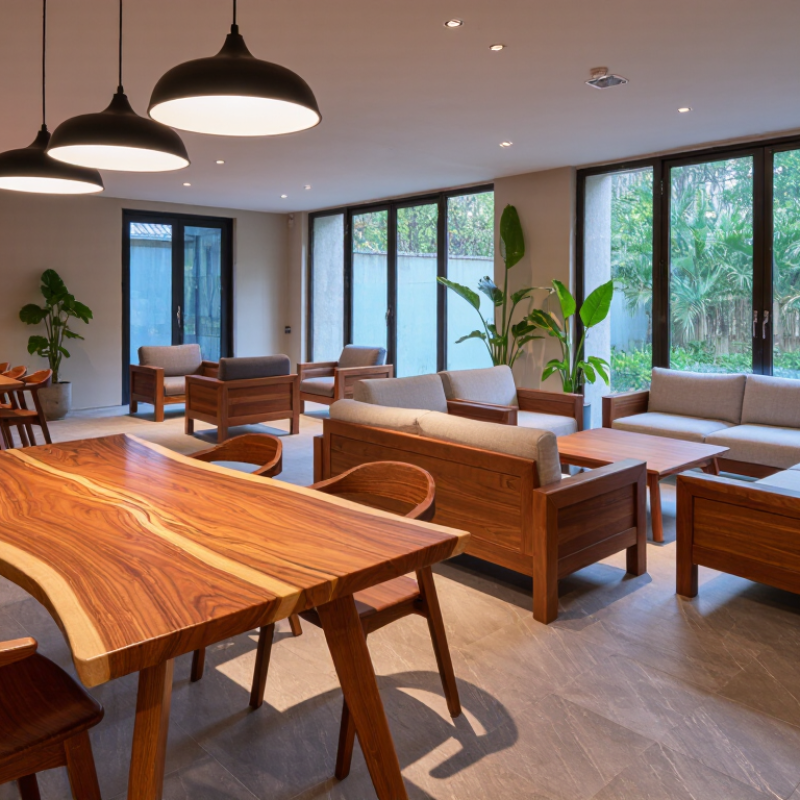
Top 10 Teak Furniture Manufacturers for Global Buyers?

Defining Quality Standards for Global Teak Furniture Manufacturers

For global buyers, teak quality starts long before a table reaches a showroom. A credible manufacturer should show legal sourcing records, chain-of-custody documents, and clear harvesting dates. Vague claims are not evidence. During factory audits, I look for consistent timber grading rather than attractive samples alone. Boards should be inspected for knots, end checks, insect damage, and uneven grain. Photographs help, but physical inspection remains more reliable.

Moisture control is equally important. Teak intended for indoor use needs a stable moisture range suited to the destination climate. Outdoor furniture demands weather-resistant construction, drainage gaps, stainless fasteners, and finishes tested for ultraviolet exposure. Ask for kiln-drying records and independent test results, not just verbal assurances. Joinery should feel tight, with smooth edges and no rocking when weight is applied. Small defects can become expensive after shipping. Packaging also matters: protected corners, dry wrapping, and strong crates reduce damage during long transit.

Professional evaluation must include people and process. Reliable factories document worker training, inspection points, corrective actions, and production tolerances. They should explain how rejected timber is handled and how replacement claims are resolved. No checklist is perfect. I have seen well-finished pieces fail because humidity changed during installation. That experience makes after-sales guidance a genuine quality measure, not a courtesy. Buyers should compare samples, factory data, independent inspections, and delivery performance before approving large orders. Price alone cannot define quality.

Top 10 Teak Furniture Manufacturers for Global Buyers — Defining Quality Standards

A technical reference profile for evaluating teak furniture suppliers. The indicators describe typical teak wood properties rather than company or brand performance; values can vary by grade, origin, moisture content, and testing method.

Reference indicators: specific gravity, Janka hardness, volumetric shrinkage, modulus of elasticity, and modulus of rupture. Values are representative teak data reported in wood-property references, including the USDA Forest Products Laboratory Wood Handbook. Units are shown in each category because the indicators are not directly comparable on one numerical scale.

How the Top 10 Teak Furniture Manufacturers Are Selected

How the Top 10 Teak Furniture Manufacturers Are Selected

The selection begins with verified manufacturing experience, not attractive product photos. Each candidate must show a functioning workshop, trained staff, and consistent production records. Factory visits or detailed video inspections help confirm this evidence. We examine teak storage, moisture control, cutting accuracy, and finishing areas. Small details matter. Uneven boards can create cracks months after delivery.

Material responsibility is also reviewed carefully. Manufacturers should provide clear information about teak origin, harvesting permissions, and chain-of-custody documents where applicable. We check whether suppliers follow relevant export rules and maintain traceable purchasing records. This process is not always simple. Documents may differ across countries, and some explanations remain incomplete. Those gaps are recorded instead of ignored.

Quality assessment includes sample orders, joint strength, surface smoothness, hardware performance, and packaging protection. We also review production capacity, delivery history, communication speed, and after-sales handling. Independent references from commercial buyers add practical evidence. A manufacturer with excellent samples but repeated delays may not qualify. Pricing receives attention, but the lowest quote is never treated as the strongest result. The final ten are selected through weighted evidence, repeated checks, and professional judgment. No ranking is perfectly objective. Buyer needs still vary by climate, project scale, and design requirements.

Top 10 Teak Furniture Manufacturers for Global Buyers? - How the Top 10 Teak Furniture Manufacturers Are Selected

Editorial selection framework based on verifiable manufacturing, sustainability, quality-control, export, and after-sales indicators

Selection No. Evaluation Dimension Weight What Is Evaluated Preferred Evidence for Global Buyers
01 Legal and Sustainable Teak Sourcing 18% Traceability of teak from legally authorized sources and the manufacturer’s ability to identify the origin of timber used in production. FSC certification or equivalent chain-of-custody documentation, supplier records, timber legality documents, and shipment traceability.
02 Teak Material Quality 15% Use of mature teak with consistent density, stable grain, limited defects, and suitability for outdoor or indoor furniture applications. Material specifications, representative samples, grading procedures, defect-control records, and clear descriptions of plantation or reclaimed teak.
03 Kiln-Drying and Moisture Control 12% Ability to control timber moisture before assembly in order to reduce cracking, warping, joint movement, and dimensional instability. Documented kiln-drying process, moisture-meter inspections, batch records, storage controls, and climate-appropriate moisture specifications.
04 Manufacturing and Joinery Capability 12% Precision of cutting, mortise-and-tenon or equivalent joinery, hardware installation, sanding, edge finishing, and structural assembly. Factory process documentation, production-line photographs or audits, quality checkpoints, tolerance requirements, and pre-shipment inspection reports.
05 Outdoor Durability and Finish Performance 10% Resistance of furniture designs and finishes to moisture, sunlight, temperature changes, corrosion, and repeated outdoor use. Product-care instructions, finish specifications, corrosion-resistant hardware details, durability test reports, and clearly stated use limitations.
06 Quality Management System 10% Consistency of inspection procedures from incoming timber through production, final assembly, packaging, and shipment. ISO 9001 certification where applicable, written inspection plans, corrective-action records, sampling procedures, and documented acceptance criteria.
07 Product Range and Customization 8% Ability to supply coordinated collections, different dimensions, contract-grade products, replacement parts, and project-specific designs. Technical drawings, finish and fabric options, customization limits, minimum order information, prototyping capability, and product documentation.
08 International Compliance and Testing 6% Readiness to meet destination-market requirements for furniture safety, packaging, materials, labeling, and restricted substances. Applicable test reports, packaging specifications, chemical compliance declarations, product labels, and market-specific documentation.
09 Export and Logistics Capability 5% Experience preparing export documentation and protecting teak furniture during containerized or less-than-container-load transportation. Packing standards, container-loading plans, export documentation samples, palletization procedures, delivery terms, and damage-prevention methods.
10 Warranty and After-Sales Support 4% Clarity and reliability of warranty coverage, spare-part availability, claims handling, care guidance, and communication after delivery. Written warranty terms, service response procedures, replacement-part policy, care manuals, claim records, and defined responsibilities by market.
Total Selection Weight 100% Manufacturers are ranked by verified performance across the ten dimensions above; unsupported claims receive no credit.
Scoring principle: Each dimension should be scored using documented evidence rather than promotional statements. Buyers should verify current certificates, timber legality records, product specifications, inspection results, and warranty terms before placing an order.

Profiles of the Leading Teak Furniture Manufacturers

Top 10 Teak Furniture Manufacturers for Global Buyers?

The strongest teak furniture manufacturers differ in scale, craft, and export experience. An Indonesian plantation-focused producer may offer dense grain, careful sanding, and traceable timber records. A Vietnamese factory often combines CNC cutting with hand finishing for hospitality projects. Thai workshops are known for carved details and traditional joinery. Indian manufacturers frequently handle custom dimensions, mixed finishes, and container-scale orders. Each profile deserves practical inspection.

A Malaysian contract manufacturer may specialize in outdoor collections and weather-resistant coatings. A Brazilian producer can provide plantation teak with broad dining tables and thick support frames. A European workshop often emphasizes refined proportions, repairable construction, and strict documentation. A Chinese factory may deliver efficient batch production, but buyers should verify timber sources and quality controls closely. Smaller Indonesian studios can create distinctive pieces, although capacity may change during busy seasons.

The final two profiles reflect different strengths. A Vietnamese artisan producer may excel at woven teak seating and small-batch development. An Indian exporter may combine metal, teak, and upholstery for resort interiors. Ask every supplier for recent moisture readings, joint photographs, packaging details, and sample approval terms. Look closely. Teak should feel stable, not merely heavy. A beautiful sample can still hide uneven drying or weak hardware. I would also confirm production schedules, inspection access, and replacement procedures before placing a large order. No factory is flawless. Reliable communication matters as much as polished furniture.

Comparing Product Range, Craftsmanship, and Production Capacity

Global buyers should compare the top 10 teak furniture manufacturers through measurable production evidence, not attractive catalogs. Product range matters first: dining tables, outdoor seating, bedroom pieces, and custom orders reveal design flexibility. FAO’s Global Forest Resources Assessment 2020 recorded 294 million hectares of planted forests worldwide, but it does not confirm teak quality or factory performance.

Craftsmanship becomes visible in small details. Inspect joint alignment, sanding marks, edge softness, hardware fitting, and moisture control. Many professional buyers request kiln-drying records and moisture readings near 8–12% for indoor furniture. That range is practical, not universal. Local climate and final installation can change the result.

Production capacity should include kiln volume, monthly output, worker experience, and average lead times. ITTO market reviews repeatedly emphasize traceability, processing capability, and changing tropical timber trade conditions. A factory producing 500 pieces monthly may outperform a larger supplier if its inspection system is stronger. Ask for recent inspection reports, packaging photographs, replacement policies, and shipment records. Short answers are warning signs.

The comparison is not perfect. Public reports rarely verify factory-level claims, and “high capacity” can sometimes mean subcontracting. Buyers should compare three sample orders, not one showroom piece. A careful scorecard can measure range, workmanship, consistency, and delivery reliability without relying on reputation alone.

Assessing Export Services, Certifications, and Buyer Support

When comparing the top 10 teak furniture manufacturers for global buyers, export reliability deserves equal attention to design. Experienced suppliers should explain teak origin, moisture control, kiln-drying methods, and packaging standards. Ask for recent factory photos, loading records, and sample inspection reports. A polished catalog is not enough.

Certifications should match the buyer’s market and product claims. Look for valid forest-management or chain-of-custody documentation, then verify the certificate number independently. Check whether it covers the actual factory, product range, and shipment period. Customs invoices, packing lists, fumigation records, and wood-origin statements should be prepared without repeated reminders. Small documentation gaps can delay a container for weeks.

Buyer support becomes visible after the order is placed. Reliable manufacturers provide clear lead times, responsive quality updates, and replacement procedures for damaged pieces. Request a pre-shipment inspection, carton dimensions, product weights, and moisture readings. A strong supplier may also advise on port selection and seasonal shipping risks. Still, no supplier is perfect. Samples can differ slightly from mass production, and certification language may confuse smaller buyers. Written specifications, approved samples, and staged payments reduce those risks. Test communication before committing to ten containers. One unanswered question is a warning.

FAQS

What should global buyers compare among teak furniture manufacturers?

Compare product range, craftsmanship, production capacity, export records, and buyer support. A beautiful catalog proves little. Request sample orders before making a large commitment.

How can buyers inspect teak furniture craftsmanship?

Check joint alignment, sanding marks, softened edges, and hardware fitting. Look underneath the table. Uneven surfaces may reveal rushed work.

What moisture level is suitable for indoor teak furniture?

Many buyers request readings near 8–12% for indoor furniture. This range is practical, not universal. Climate and installation conditions can change the result.

How should buyers verify timber traceability?

Ask for timber-origin records and valid chain-of-custody documents. Verify certificate numbers independently. Confirm coverage for the actual factory and shipment period.

What production details should buyers request?

Request kiln volume, monthly output, worker experience, and typical lead times. A large factory may use subcontractors. Capacity claims need evidence.

What export documents should a reliable supplier provide?

Suppliers should prepare invoices, packing lists, wood-origin statements, and shipping records. Ask for carton sizes and product weights. Small gaps can delay a shipment.

How can buyers reduce quality differences between samples and bulk orders?

Use written specifications, approved samples, and staged payments. Request pre-shipment inspection access. Samples can still differ slightly.

What packaging and replacement details matter for teak furniture?

Ask for carton photographs, protective materials, damage procedures, and replacement timelines. Inspect vulnerable corners. Weak packaging can ruin good furniture.

How should buyers judge supplier communication?

Test communication before placing a large order. Ask several detailed questions. One unanswered question is a warning. My comparison would still be imperfect.

Conclusion

This guide presents a practical framework for identifying the top 10 Teak Furniture manufacturers for global buyers. It explains how quality is evaluated through timber selection, moisture control, kiln-drying, construction strength, finishing consistency, design reliability, and responsible production practices. The selection process also considers manufacturing experience, factory capabilities, quality-control systems, and the ability to deliver consistent results for different markets and order sizes.

The article compares leading manufacturers by product range, craftsmanship, customization options, production capacity, and lead-time management. It also examines essential export services, including packaging, documentation, shipping coordination, certifications, and communication throughout the purchasing process. By reviewing these factors together, buyers can better assess which suppliers offer dependable products, transparent cooperation, flexible support, and the capacity to meet long-term commercial requirements. The goal is to help international buyers make informed decisions based on measurable standards rather than appearance or price alone.


Madeline

Madeline

Madeline is a dedicated marketing professional with a wealth of expertise in our company's core offerings. With a keen understanding of the industry, she brings a unique perspective to her role, consistently delivering high-quality content that highlights the superior aspects of our products. As......