China Top 10 Hardware Furniture Manufacturers

Time:2026-11-17 Author:Oliver
0%

Choosing a reliable furniture hardware partner can influence a product’s feel, service life, and production schedule. A drawer that glides smoothly, a hinge that holds its alignment, and a handle with an even finish all reflect decisions made well before assembly. This guide to China’s top 10 hardware furniture manufacturers introduces companies serving different product needs, from cabinet fittings and slides to connectors and decorative hardware. Details matter.

The comparison considers factors buyers can investigate, including product range, manufacturing capabilities, customization options, quality documentation, and export experience. Buyers should also request samples, confirm load ratings, and check whether finishes remain consistent across production batches. A polished catalogue alone is not proof of dependable performance. Neither is a low quotation. The right supplier depends on the application, order volume, required tolerances, and after-sales support. Rankings can guide research, but they cannot replace factory checks or clear technical discussions. There is no perfect shortlist. Some useful information may be difficult to verify, and supplier performance can change over time. Treat this overview as a practical starting point, then validate specifications and communication directly before committing to an order.
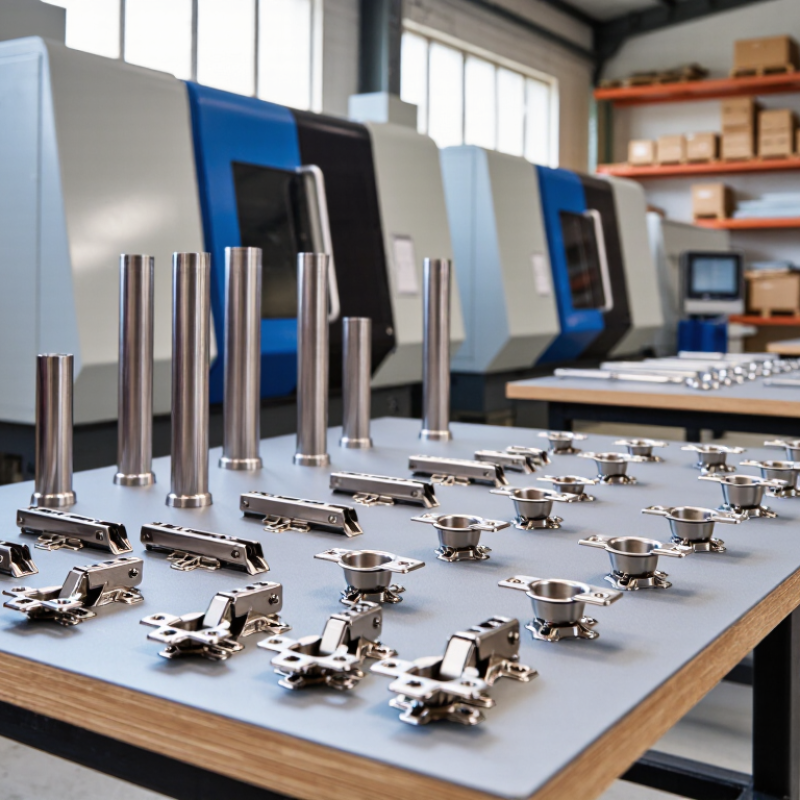
China Top 10 Hardware Furniture Manufacturers

What Furniture Hardware Manufacturers in China Produce

China’s furniture hardware manufacturers produce the fittings that make cabinets, wardrobes, and tables work. Common products include concealed hinges, drawer slides, handles, knobs, bed connectors, furniture legs, and wardrobe rails. Some factories focus on one product family; others offer coordinated sets for whole-room projects.

Production may involve steel stamping, zinc-alloy die casting, aluminum machining, polishing, coating, and final assembly. Materials and finishes vary by use: a kitchen hinge faces frequent movement and moisture, while a sofa leg must handle weight and floor contact. Manufacturers may also offer soft-close mechanisms and adjustable fittings. Details matter. A smooth finish is useful, but alignment and consistent movement matter more. Samples can feel different from catalog pictures.

Tips: Ask for material specifications, load information, finish samples, and inspection records. Test hinges and slides on the actual cabinet design. Small differences in door weight or mounting space can affect performance.

For reliable evaluation, compare opening cycles, slide smoothness, screw placement, and finish consistency across several samples. Ask how production batches are checked, not only how prototypes are made. A practical point: attractive hardware can still feel awkward after installation. Dimensions and installation instructions deserve a close look, though they are easy to overlook.

What Furniture Hardware Manufacturers in China Produce

Representative product categories and the number of example product types listed for each.

Furniture hardware manufacturers commonly produce hinges, drawer slides, handles, cabinet connectors, wardrobe fittings, and furniture legs or casters. Each bar counts the four examples named for that category below; these counts describe the examples shown, not factory output, market share, or sales.

Examples: concealed, butt, pivot, and soft-close hinges; ball-bearing, undermount, roller, and push-to-open slides; knobs, pulls, edge pulls, and recessed handles; cam locks, dowels, brackets, and connector fittings; wardrobe rods, lift systems, sliding-door rollers, and shelf supports; furniture legs, adjustable feet, swivel casters, and fixed casters.

How China’s Top 10 Manufacturers Are Identified

Identifying China’s top ten hardware furniture manufacturers requires more than comparing factory photographs or catalogue size. A credible ranking should assess production capacity, material traceability, quality control, export consistency, and after-sales support. Each claim should be checked against factory records, product samples, and shipment documents. Numbers need context.

The National Bureau of Statistics reported 655.7 billion yuan in operating revenue for China’s furniture manufacturing sector in 2023. This broad category includes furniture makers, not hardware suppliers alone, so it cannot establish a hardware ranking by itself. China Customs trade statistics can help verify export activity, while third-party factory audits and batch inspection records reveal operational detail. For buyers, practical checks include hinge-cycle tests, coating thickness measurements, and corrosion testing suited to the intended environment.

A transparent top-ten method should publish its indicators and weighting. For example, quality consistency and documented capacity should carry more weight than online visibility. A supplier’s sample may perform well, yet mass production can vary; test multiple batches where possible. No ranking is perfectly neutral. The selection should state its data date, evidence sources, and limitations, especially when private companies disclose little financial information.

Profiles of the Top 10 Furniture Hardware Manufacturers

China’s leading furniture-hardware manufacturers are best compared by product depth, testing, and production flexibility, rather than by an unsupported sales ranking. Grand View Research valued the global furniture market at USD 736.7 billion in 2023 and forecast 5.9% annual growth through 2030. That figure covers furniture, not hardware alone, but it signals why dependable fittings matter. Small parts carry daily loads.

A practical ten-profile landscape includes specialists in concealed hinges, drawer slides, soft-close dampers, lift systems, cabinet connectors, handles, locks, adjustable feet, wardrobe fittings, and integrated OEM production. For each profile, buyers should check load ratings, cycle-test methods, finish consistency, and sample-to-batch tolerance. A drawer should glide evenly; a hinge should not sag after repeated use. The details show.

CSIL’s World Furniture Outlook provides broader context on furniture production and trade, but comparable public revenue data for hardware-only makers remains limited. That is a gap worth acknowledging. A factory audit, material certificate, and repeat-order sample can reveal more than a polished catalog. Even so, no single test predicts every installation condition.

Key Products and Manufacturing Capabilities

China’s furniture hardware makers compete through hinges, drawer slides, handles, connectors, and adjustable legs. Their capabilities often include stamping, die casting, CNC machining, polishing, and surface coating. Small parts matter. A drawer slide that binds under load can undermine an otherwise well-built cabinet.

The market is growing, but figures need context. Grand View Research estimated the global furniture hardware market at USD 25.32 billion in 2023 and projected a 5.8% compound annual growth rate through 2030. China’s National Bureau of Statistics reported RMB 655.7 billion in operating revenue for above-scale furniture manufacturers in 2023. This large downstream sector supports demand for fittings, though it does not prove that every hardware factory has equal quality or capacity.

When comparing manufacturers, check more than machine counts. Ask for load-cycle results, coating-thickness records, corrosion-test conditions, and samples from routine production—not only polished showroom pieces. Tolerance is tested. A competent supplier should explain how it controls batch consistency and handles custom tooling. Some factories may excel at high-volume hinges but struggle with low-volume, complex slides; buyers should verify this directly. Published capacity figures can be vague, and that deserves scrutiny.

China Top 10 Hardware Furniture Manufacturers - Key Products and Manufacturing Capabilities

Anonymous, product-segment overview of common furniture-hardware manufacturing capabilities in China. The entries are not named companies or a verified company ranking; processes and testing vary by manufacturer and product specification.

No. Product Segment Key Products Typical Manufacturing Capabilities Common Quality Checks
1 Cabinet Hinges Concealed hinges, soft-close hinges, clip-on hinges and specialty-angle hinges Metal stamping, component forming, riveting, spring installation, assembly and surface finishing Opening and closing operation, alignment adjustment, corrosion resistance and cycle testing
2 Drawer Slides Ball-bearing slides, undermount slides, soft-close slides and telescopic runners Steel strip forming, punching, rail assembly, bearing integration and coating or plating Extension and closing action, fit, operating noise, load performance and cycle durability
3 Furniture Handles and Knobs Cabinet pulls, drawer handles, knobs and profile handles Zinc-alloy die casting, aluminum extrusion, machining, polishing and decorative finishing Dimensions, mounting-hole spacing, finish consistency, adhesion and surface defects
4 Furniture Connectors and Fittings Cam locks, dowels, brackets, corner braces and assembly connectors Stamping, turning, threading, die casting, deburring and protective surface finishing Thread fit, dimensions, joint engagement, coating condition and assembly fit
5 Wardrobe and Closet Fittings Hanging rails, wardrobe brackets, trouser racks, pull-down rails and storage fittings Tube cutting, stamping, extrusion, drilling, assembly and powder coating or plating Dimensions, mounting fit, sliding or folding action, finish and load performance
6 Lift-Up and Flap Mechanisms Cabinet lift systems, flap stays and assisted-opening mechanisms Stamped metal arm production, spring or gas-strut integration, assembly and adjustment Opening force, movement control, adjustment range, retention and cycle operation
7 Furniture Legs and Leveling Components Metal legs, adjustable feet, glides and leveling mounts Tube cutting, stamping, welding, threading, plastic-component molding and finishing Height adjustment, thread fit, joint strength, stability and finish condition
8 Furniture Casters Swivel casters, fixed casters, twin-wheel casters and locking casters Bracket stamping, wheel molding, axle assembly and installation of swivel or brake components Rolling and swivel operation, brake function, mounting dimensions and load performance
9 Office Chair Mechanisms Tilt mechanisms, seat plates, adjustment levers and chair bases Sheet-metal stamping, welding, machining, mechanism assembly and coating Adjustment function, locking operation, fit, structural performance and repeated operation
10 Furniture Screws and Fasteners Wood screws, machine screws, threaded inserts, bolts and specialty fasteners Wire preparation, cold heading, thread rolling, heat treatment where specified and surface finishing Thread dimensions, hardness where specified, coating condition and installation fit

Market Trends and Factors for Comparing Manufacturers

China Top 10 Hardware Furniture Manufacturers

Market Trends and Factors for Comparing Manufacturers

Furniture hardware buyers are weighing durability, smooth movement, and flexible design alongside price. Grand View Research valued the global furniture market at about US$747.7 billion in 2023, in its 2024 market report. That wider market matters: growth in furniture demand can increase pressure on hinge, slide, and connector suppliers. Yet broad furniture figures do not measure hardware demand directly. Treat them as context, not a forecast.

China’s National Bureau of Statistics reported 2023 revenue of about RMB 655.7 billion for furniture manufacturing enterprises above designated size. This scale supports extensive supplier networks, but it does not guarantee consistent quality. Compare manufacturers using documented load and cycle tests, corrosion resistance, production capacity, and batch inspection records. Ask for samples, then check alignment and closing action across repeated use. Small differences show quickly. Also review lead times, material traceability, customization limits, and after-sales response. A low quotation can hide tooling costs or variable tolerances. That deserves a closer look.

Market demand is also shifting toward modular furniture and soft-close fittings, where installation accuracy affects the user experience. Request test methods and acceptance criteria, not just performance claims. Compare equivalent specifications; otherwise, quotations are misleading. Some suppliers provide polished samples but weaker production controls. A factory visit or independent inspection can help, though neither removes every risk.

FAQS

What furniture hardware products do Chinese manufacturers commonly make?

Common products include hinges, drawer slides, handles, connectors, and adjustable legs. Small parts can affect a cabinet’s everyday use.

Which manufacturing capabilities should buyers look for?

Factories may offer stamping, die casting, CNC machining, polishing, and surface coating. Capabilities vary between suppliers.

How can buyers check product durability?

Request load-cycle results, coating-thickness records, and corrosion-test conditions. Ask for samples from routine production, not only showroom pieces. Test them under realistic use.

Do large furniture-market figures guarantee reliable hardware suppliers?

No. China’s above-scale furniture manufacturers reported RMB 655.7 billion in revenue in 2023. This indicates a large downstream sector, not equal quality across factories.

What should buyers inspect in drawer slides and hinges?

Check alignment, movement, and closing action across repeated use. A slide that binds under load is a warning sign. Small differences matter.

How should buyers compare production capacity?

Ask for documented capacity, batch inspection records, and lead times. Some factories handle high-volume hinges well but may struggle with complex, low-volume slides. Verify directly.

Why can hardware quotations be difficult to compare?

Specifications may differ, making prices misleading. Ask about tooling costs, material traceability, and tolerance controls. A low quote can hide trade-offs.

Which furniture trends affect hardware choices?

Modular furniture and soft-close fittings are gaining attention. Installation accuracy affects how fittings perform. Claims need clear test methods.

Can a factory visit remove all sourcing risks?

No. A visit or independent inspection can help, but neither removes every risk. Polished samples are not the whole story.

Conclusion

This article explores China’s Hardware Furniture industry, explaining the components manufacturers produce for residential and commercial furniture, such as hinges, drawer slides, handles, connectors, and storage fittings. It outlines how leading manufacturers can be assessed using factors including product quality, production capacity, technical expertise, customization options, and reliability, then presents profiles of ten manufacturers without focusing on brand promotion.

The article also reviews key products and manufacturing capabilities, from precision processing and surface finishing to quality control and large-scale production. Finally, it considers market trends such as demand for durable, functional, and customizable fittings, along with practical factors buyers can compare when selecting a supplier. These include product specifications, material choices, order flexibility, delivery performance, and after-sales support.


Oliver

Oliver

Oliver is a seasoned marketing professional with a wealth of expertise in driving brand awareness and engagement. With a deep understanding of our company's product offerings, he consistently delivers high-quality content that enriches our professional blog. His insights not only shed light on......