Choosing the right supplier can shape how a courtyard looks, feels, and performs over time. Courtyard Furniture must handle sun, rain, frequent use, and changing outdoor conditions. A woven chair may look sturdy in a photograph, but its frame, joints, and finish tell a fuller story. Small details matter.
This guide introduces ten suppliers for global buyers and explains what to examine beyond a product catalogue. We consider material options, design range, customization, production capacity, quality controls, and export experience. Buyers should still verify these details directly. Request clear specifications, recent product images, sample terms, packaging information, and written warranty conditions before placing a large order. Ask how wood is sourced, how metal is protected against corrosion, and whether cushions use fabrics suited to outdoor exposure. Claims can sound reassuring; supporting documents and consistent answers matter more.
International orders bring practical questions. Shipping costs, lead times, minimum order quantities, and communication habits can affect the final result as much as design. A low quotation may exclude packaging or customization, so compare like with like. No supplier list can predict every project’s needs, and rankings are never a substitute for careful checks. Use these profiles as a starting point, then assess samples against your own climate, budget, and service expectations. The best choice is not always the most polished catalogue. It is the supplier whose promises hold up when details are tested.
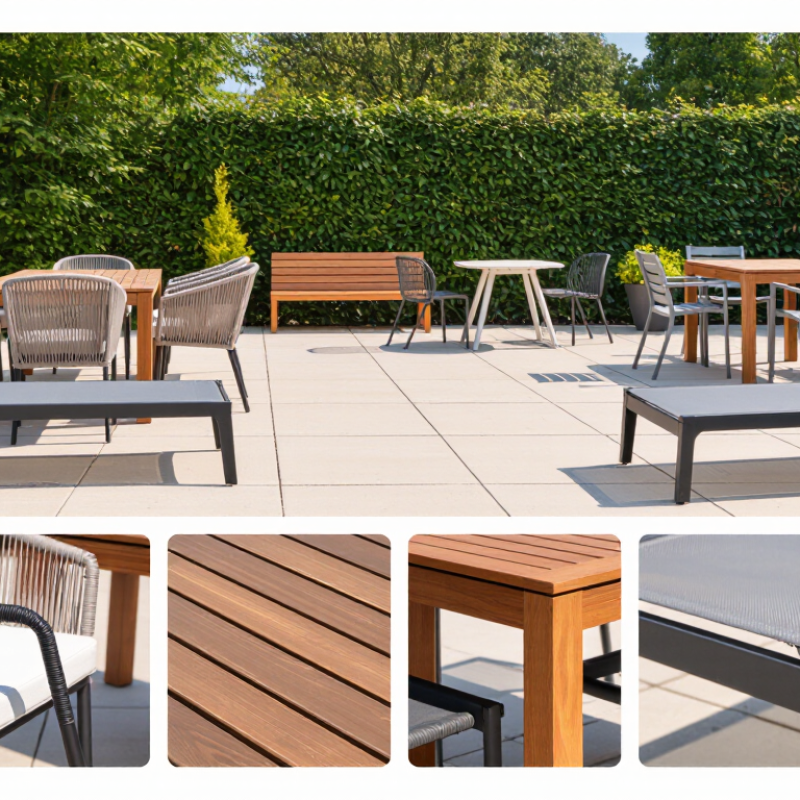
Courtyard furniture usually includes dining sets, lounge chairs, benches, side tables, and storage pieces. Dining sets suit meals and outdoor work, while low lounge seating creates a relaxed corner near a garden wall. Benches fit narrow paths. Measure walking routes before choosing table sizes; a chair that blocks a doorway quickly becomes frustrating. Small courtyards benefit from foldable or stackable pieces, though frequent folding can wear hinges. That trade-off matters.
Material affects maintenance as much as appearance. Aluminum is light and resists rust, but thin frames may feel less stable in strong wind. Teak and other durable hardwoods add warmth; they still need periodic cleaning and suitable outdoor care. Powder-coated steel feels firm, while synthetic woven resin is easy to wipe after rain. Check joints, drainage gaps, and replaceable feet, not just the surface finish. For coastal or humid sites, confirm the supplier’s material specifications and care guidance instead of relying on broad claims. Even good furniture needs shelter.
Approximate material density in kg/m³: teak wood ~650, HDPE ~950, aluminum ~2,700, and steel ~7,850. Density is one factor in furniture weight; actual values vary by wood moisture, material grade, and alloy. It does not indicate weather resistance or overall product quality.
The outdoor furniture market reached USD 50.4 billion in 2023, according to Grand View Research (GVR). This figure offers useful context for global buyers exploring courtyard furniture suppliers in China. It describes the broader outdoor furniture market, not courtyard products alone. That distinction matters. Buyers should not treat a large market total as proof that every style or price range has equal demand.
For a courtyard project, practical details often matter more than headline numbers. Check frame materials, finish consistency, cushion fabrics, and how joints are assembled. Ask suppliers for clear product specifications and samples that match the proposed order. A chair displayed under showroom lights may look different after weeks of sun and rain. The market figure cannot answer those questions. It only signals the scale of the wider category. Regional climate, shipping arrangements, and intended use still shape purchasing decisions. Some buyers may focus on compact sets for small patios; others need larger seating groups for hospitality spaces. These are different requirements. GVR’s 2023 estimate is a starting point, not a sourcing plan, and it leaves room for careful product-level checks.
When comparing China’s courtyard furniture suppliers, treat MOQ as a project cost, not just a number. Ask whether the quoted minimum applies to one design, one color, or a mixed container. A low MOQ may still require extra setup fees. Get those details in writing.
Lead times need the same precision. Request separate estimates for samples, production, and shipping readiness. For example, confirm when the clock starts: after deposit, approved drawings, or finish selection. Ask how suppliers handle rain delays in outdoor coating or shortages of aluminum, teak, and woven materials. The stated schedule can look neat on paper. Real workshops are less neat.
For OEM services, check whether the supplier can provide dimensioned drawings, color swatches, logo placement, and protective packaging samples. Keep a signed-off reference sample; even a small change in weave tension can affect the finished look. For EN 581, ask which product and test scope the report covers, and whether it matches the current design and materials. A report for a similar chair is not enough. Verify the issuing laboratory and report details independently, then confirm how production checks are recorded. I would not rely on a single email attachment. Some buyers overlook this. That is an easy mistake to make.
| Supplier Profile | Typical Product Focus | Indicative MOQ | Indicative Production Lead Time | OEM Services to Confirm | EN 581 Testing to Request |
|---|---|---|---|---|---|
| Aluminum-frame specialist | Outdoor dining chairs, tables, and modular seating | 20–50 sets per model | 30–50 days after approved samples and deposit | Frame dimensions, powder-coat colors, fabric selection, logo packaging | Applicable EN 581 seating and table test reports for the exact model and configuration |
| Rattan and wicker furniture maker | Woven lounge chairs, sofas, and dining sets | 30–100 pieces per model | 35–60 days; hand-weaving complexity can affect timing | Weave pattern, resin-wicker color, cushion fabric, cushion labels, carton artwork | Ask whether the report covers the frame, woven construction, and intended outdoor use |
| Steel-frame outdoor furniture producer | Garden chairs, benches, and folding furniture | 50–150 pieces per model | 30–55 days, depending on finish and order quantity | Tube specifications, finish options, folding mechanisms, private-label packaging | Request relevant seating or table tests and verify the tested finish and product version |
| Solid-wood garden furniture workshop | Wooden benches, dining sets, and loungers | 20–80 sets per model | 40–70 days; timber preparation and finishing affect schedules | Wood species, dimensions, oil or stain finish, assembly instructions, packaging | Confirm applicable EN 581 test scope and that the report identifies the supplied model |
| Composite and recycled-material furniture supplier | Low-maintenance benches, chairs, and outdoor tables | 30–100 pieces per model | 35–60 days, subject to material availability | Color matching, recycled-content documentation, dimensions, branding, carton design | Request relevant load, stability, and durability testing for the specific furniture type |
| Rope and textilene seating manufacturer | Rope chairs, sling seating, and coordinated patio sets | 50–150 pieces per model | 30–55 days after material and color approval | Rope pattern, fabric color, frame finish, cushion options, private-label tags | Check that seating test reports cover the same frame, seat materials, and product design |
| Cast-aluminum furniture producer | Decorative dining sets, benches, and patio chairs | 20–60 sets per model | 40–65 days; tooling or custom finishes may add time | Pattern or casting changes, finish color, protective packaging, logo components | Request applicable EN 581 seating or table reports for the finished product, not just components |
| Outdoor furniture assembler and sourcing supplier | Mixed-material courtyard collections and coordinated sets | 30–100 sets per collection | 35–65 days, depending on component sourcing | Collection coordination, mixed-material specifications, packaging, consolidated shipping | Verify reports and traceability separately for each model included in the collection |
| Folding and space-saving furniture maker | Folding chairs, bistro tables, and compact balcony sets | 50–200 pieces per model | 25–50 days for standard designs; customization may extend timing | Folding hardware, dimensions, color, safety labels, retail-ready packaging | Request relevant stability and strength test evidence for the folding model and mechanism |
| Commercial-project furniture supplier | Heavy-duty courtyard seating and outdoor dining furniture | 50–200 pieces per model, subject to project terms | 45–75 days; project approvals and samples can add time | Custom specifications, project samples, material schedules, installation documents | Confirm the applicable EN 581 parts, test laboratory, report date, and product-model match |
| Planning guide only: The MOQ and lead-time figures above are indicative procurement ranges, not verified quotations or supplier-specific claims. Actual terms vary by model, materials, customization, order volume, season, and shipping arrangements. EN 581 is a series of standards covering outdoor seating and tables; applicable parts depend on the product. Request current, model-specific test reports and confirm their scope and authenticity with the supplier or testing laboratory. A test report should not be treated as a blanket certification for an entire product range. | |||||
China’s top courtyard furniture suppliers serve different needs, from compact balcony sets to large dining collections. Common products include aluminum-framed chairs, teak benches, woven lounge seating, and weather-resistant tables. Compare frame joints, surface finishes, fabric specifications, and replacement-part availability—not just catalog photos. A close-up sample can reveal rough welds or uneven coating. Details matter.
Export capabilities vary by supplier. Some can manage custom dimensions, neutral packaging, pallet loading, and coordinated production across several product types. Others focus on a narrower range, which may mean steadier quality but fewer options. Ask about production lead times, inspection procedures, carton drop tests, and export documents relevant to your destination. Request recent product photos and a sample before placing a large order. Supplier claims deserve verification.
Tips: Ask for the packed dimensions and gross weight of each item; freight costs can change quickly. Confirm how outdoor materials are tested, and agree on acceptable color variation in writing. Small details are easy to overlook.
A courtyard set may look solid in photos, but buyers need evidence beyond polished images. Ask suppliers for current material specifications, test reports, and factory quality procedures. Confirm that wood species, metal grades, coatings, and fabric composition match the quotation. Check destination-market requirements with qualified local advisers; one certificate rarely covers every component. A small mismatch can cause a costly delay.
Request a production sample and inspect joints, welds, drainage gaps, and finish consistency in daylight. Before production, agree on measurable acceptance criteria: dimensions, color range, load capacity, and allowable defects. Ask how inspections are recorded and corrective actions documented. A checklist helps, but it cannot replace independent inspection when order value justifies it. Reports can look neat. Look closer.
Packaging deserves the same scrutiny. Request photos of corner protection, moisture barriers, carton labels, and pallet stability. Confirm that the packing method suits stacking and sea transit. Have carton counts, gross weights, loading plans, and shipping terms recorded in writing. Clarify who books freight, handles export documents, and reports damage. Keep time for delays. One missing label can disrupt a schedule, so verify dated milestones rather than relying on reassurance alone.
The market reached USD 50.4 billion in 2023. It covers outdoor furniture broadly, not courtyard products alone. Treat it as context, not a sourcing plan.
Check frame materials, welds, finishes, cushion fabrics, joints, and replacement-part availability. Ask for a sample matching the proposed order. Showroom lighting can hide uneven coating.
Confirm whether the minimum applies to one design, one color, or a mixed container. Ask about setup fees in writing. A low minimum may still cost more.
Request separate timelines for samples, production, and shipping readiness. Confirm when timing starts, such as after deposit or approved drawings. Workshops can run behind schedule.
Ask for dimensioned drawings, color swatches, logo placement details, and packaging samples. Keep an approved reference sample. Small weave changes can alter the look.
Confirm the report covers the exact product, design, and materials being ordered. Verify the laboratory and report details independently. One email attachment is not enough.
Ask about pallet loading, export documents, inspection procedures, and carton drop tests. Check packed dimensions and gross weight. Freight costs can change quickly.
Common options include aluminum chairs, teak benches, woven lounge seating, and weather-resistant tables. Ask how materials are tested for outdoor use. I would still double-check.
This guide introduces Courtyard Furniture by outlining its main categories, common materials, and typical uses in residential, hospitality, and commercial outdoor spaces. It also places the market in context, noting that the global outdoor furniture market reached USD 50.4 billion in 2023, according to GVR. Understanding these basics can help buyers define their needs before comparing suppliers and product options.
The guide reviews ten Chinese suppliers and their product ranges and export capabilities, while emphasizing practical selection criteria such as minimum order quantities, production lead times, OEM services, and EN 581 testing. It also explains how buyers can conduct due diligence by checking relevant compliance documentation, quality-control procedures, protective packaging, and shipping arrangements. Together, these considerations offer a structured starting point for sourcing outdoor furniture and assessing whether a supplier can meet a project’s specifications, schedule, and delivery requirements.

JIANGYIREN Furniture