10 Best Solid Wood Furniture Suppliers for Global Buyers

Time:2026-11-10 Author:Madeline
0%

Choosing a Solid Wood Furniture supplier involves more than comparing catalog photographs. Global buyers need to examine wood species, construction, finishing, and the supplier’s ability to meet consistent specifications. A solid oak dining table, for example, should have clearly stated dimensions, joinery details, and finish options—not just a polished image. Details matter.

This guide introduces 10 suppliers for buyers exploring furniture for homes, hotels, and commercial projects. Each company may differ in product range, customization, production capacity, and export experience. Those differences can affect minimum order quantities, lead times, packaging, and communication. Ask for current product specifications, material details, sample policies, and written production timelines before placing an order. Where available, review relevant quality or sustainability documentation, and confirm what it covers. A certificate’s scope matters.

No supplier is ideal for every buyer. A workshop suited to small custom runs may not handle a large, uniform shipment on schedule. A broad catalog does not guarantee the exact finish or dimensions your project needs. Even experienced buyers can overlook small details, such as hardware, color variation, or protective packing. Use this list as a practical starting point, then verify each supplier’s capabilities against your own requirements. The right choice depends on clear evidence, careful questions, and realistic expectations.
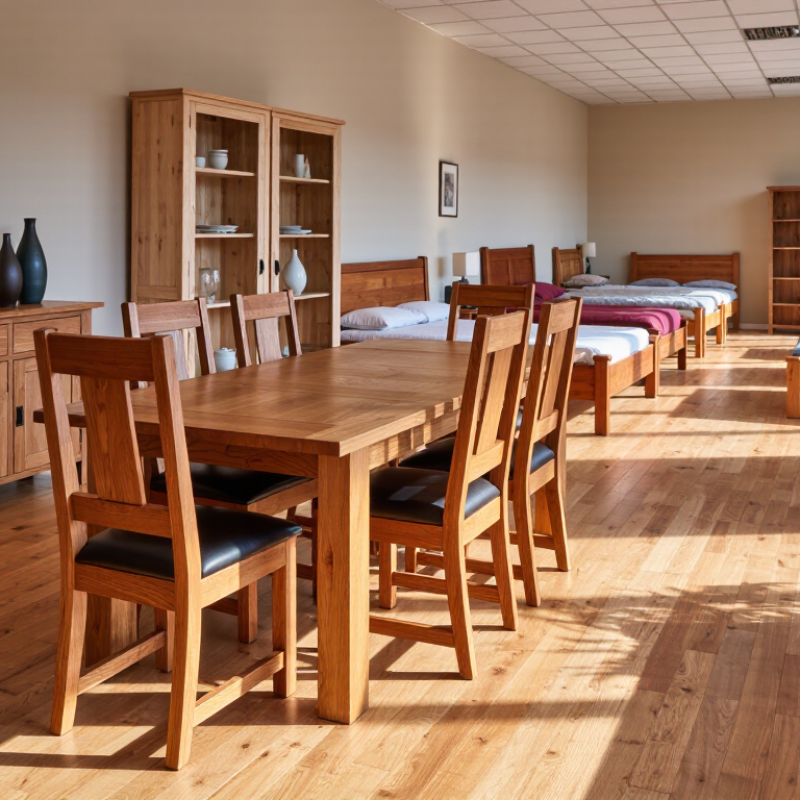
10 Best Solid Wood Furniture Suppliers for Global Buyers

Define Solid Wood Furniture and Distinguish It from Veneer and Engineered Panels

Solid wood furniture is made from sawn timber, such as oak boards or rubberwood planks, rather than a thin decorative surface. Boards may be joined into wider panels, so visible seams can appear across a tabletop. The wood continues through the piece’s thickness. Not just a label. FAO’s Global Forest Products Facts and Figures 2022 reports roughly 450 million cubic metres of sawnwood production worldwide. That figure shows the scale of the material supply, not the quality of any individual furniture item.

Veneer is a thin layer of real wood attached to a core. That core may be plywood, particleboard, or MDF. Engineered panels are made by bonding wood veneers, strands, or fibres; they are not automatically poor quality. A well-made panel can stay stable, while solid wood can still move with humidity. The USDA Forest Products Laboratory’s Wood Handbook explains how moisture changes affect wood dimensions. Ask suppliers about board thickness, panel cores, joinery, and moisture control. “Solid wood” alone does not explain the full construction.

Tip: Check an exposed edge beneath a drawer or tabletop. A continuous grain pattern may suggest solid timber; a thin wood layer over a different core suggests veneer. Request a construction specification and inspect a sample. I would not judge durability from appearance alone. Ask how the supplier tests joints and manages seasonal movement.

Assess Timber Sourcing Against FAO’s 4.06 Billion Hectares of Global Forests

FAO’s Global Forest Resources Assessment 2020 estimates that the world has 4.06 billion hectares of forest, covering about 31 percent of its land area. That figure describes forest extent, not the volume available for furniture. Forests differ in species, management, biodiversity, and access. A supplier’s sourcing details matter more than a broad “responsible timber” claim. Ask for the wood species, harvest region, and documents linking the timber to its source. Check whether records follow the material through processing and shipment.

The same FAO assessment estimates that 10 million hectares of forest were deforested each year from 2015 to 2020. This global measure does not prove that any particular shipment caused forest loss. Still, it gives buyers a reason to examine sourcing closely. For solid wood, request harvest and chain-of-custody records, then compare species and origin across invoices, product specifications, and shipping documents. Paper trails can be incomplete. Treat that as a signal to ask clearer questions, not as proof by itself.

Tips: Request sample documents before placing a large order. Look for consistent species names, harvest locations, and dates. A polished table or showroom sample cannot verify a tree’s origin. Check the paperwork, too.

Compare the 10 Suppliers by Wood Species, Craftsmanship, and Export Capability

Compare the ten suppliers across species, workmanship, and export readiness—not catalog size alone. FAO’s Global Forest Products Facts and Figures 2022 reports roughly 470 million cubic metres of sawnwood produced worldwide. That broad supply hides real differences: oak and ash show distinct grain, while walnut often brings darker color and higher material costs. Ask each supplier for species-specific sourcing details, kiln-drying targets, and clear photos of board selection.

Details matter. A polished showroom sample may not match a full production batch.

For craftsmanship, inspect corner joints, drawer alignment, finish consistency, and the underside of tabletops. Request moisture readings and a sample from the intended production process. I would not treat “solid wood” as a quality grade; construction details still decide durability.

Export capability needs the same scrutiny. Compare packing methods, container-loading plans, production lead times, and experience preparing shipment documents for your destination. Ask how the supplier protects edges and controls humidity during transit. A neat catalog is not proof. One caveat: a small sample cannot reveal every batch variation, so written tolerances and pre-shipment inspection can reduce surprises.

Verify Supplier Credentials, Chain of Custody, and Product Compliance

A polished catalog is not proof of a reliable supplier. Verify the company’s registered business details, factory address, and export history, then compare them across invoices and inspection records. Request current certificates and check the issuing body, scope, and expiry date. Names or addresses that differ deserve a clear explanation. Small details matter.

Chain-of-custody records should connect the timber to its stated forest or source, through processing and shipment. Ask which wood species are used and whether each batch can be traced by purchase records, mill documents, or shipment references. A dining table may look identical to another, yet its timber history can be very different. If records stop at the mill, note that gap rather than assuming full traceability. Ask for dated records.

Product compliance also depends on the destination market and the item itself. Confirm applicable requirements for material declarations, finishes, emissions, labeling, and packaging with a qualified local adviser. Request test reports for the actual model or material, not merely a generic document. Check the laboratory, test date, and product description. A sample can help, but it cannot replace independent checks on production batches. Paperwork can be neat and still incomplete.

Evaluate Lead Times, Shipping Terms, and Total Landed Cost for Global Buyers

10 Best Solid Wood Furniture Suppliers for Global Buyers

For global buyers, a supplier’s quoted price is only the starting point. Compare production lead time, port of loading, shipment frequency, and the exact costs covered by each Incoterm. Calculate total landed cost: furniture price, export handling, freight, insurance, import charges, destination fees, and inland delivery. Solid wood pieces also need protective packaging and clear moisture-control specifications; ask how these affect packing dimensions and freight charges.

UNCTAD’s Review of Maritime Transport 2024 reports that maritime trade grew 2.4% in 2023, with 2% growth forecast for 2024. These figures describe the wider shipping market, not furniture shipments, but they underscore why buyers should verify schedules rather than rely on optimistic estimates. Request a production timeline, a realistic port-to-door estimate, and written notice procedures for delays. A low quote can still hide destination charges. Even a careful cost sheet can miss one.

Tips: Ask suppliers to quote the same delivery scope, such as FOB or DAP, and list excluded charges. Small details matter. Confirm whether the stated lead time begins after deposit, drawing approval, or final specifications. Keep a buffer for inspections and inland delivery; it may feel excessive until a vessel misses its slot.

Incoterms 2020: Cost and Clearance Responsibilities for Global Furniture Buyers

A practical comparison of four common shipping terms for solid wood furniture orders.

Bars count four responsibility areas: export clearance, main carriage, import clearance, and import duties or taxes. They show who is responsible—not the monetary cost. Under CIF, the seller pays for carriage and insurance to the named destination port, but risk transfers to the buyer once goods are loaded on board. Actual landed cost depends on the route, cargo, destination charges, and contract details; confirm the named place and Incoterms version in the sales contract.

FAQS

How much of the world’s land is covered by forests?

Global estimates put forest area at 4.06 billion hectares, or about 31% of land. That figure does not show how much timber is suitable for furniture.

What sourcing documents should buyers request?

Ask for the wood species, harvest region, and records linking timber to its source. Compare these details across invoices, product specifications, and shipping documents. Check for gaps.

Does global deforestation data prove a shipment caused forest loss?

No. Estimates of forest loss provide context, not proof about a specific shipment. Incomplete paperwork is a reason to ask more questions, not proof by itself.

How can buyers compare suppliers’ wood and craftsmanship?

Request species-specific sourcing details, kiln-drying targets, and clear production photos. Inspect joints, drawer alignment, finish consistency, and tabletop undersides. Look closely.

Is “solid wood” enough to judge furniture quality?

No. Construction details matter. Ask for moisture readings, written tolerances, and a sample made through the intended production process. Samples cannot reveal every batch variation.

What should buyers check before approving a large order?

Request sample documents early. Check whether species names, harvest locations, and dates stay consistent. A showroom piece cannot confirm where the timber came from.

What costs belong in a total landed cost estimate?

Include furniture, export handling, freight, insurance, import charges, destination fees, and inland delivery. Compare quotes with the same delivery scope. Small charges can be missed.

How can buyers assess shipping schedules and lead times?

Request a production timeline, port-to-door estimate, and written delay procedures. Confirm when the lead time begins. Keep a buffer for inspections and inland delivery; it may feel excessive until a vessel misses its slot.

Conclusion

Solid Wood Furniture is made primarily from natural timber, with each piece showcasing the wood’s structure and character. It differs from veneer, which uses a thin layer of wood over another material, and from engineered panels, which are manufactured from bonded wood fibers or particles. For global buyers, understanding these differences helps clarify durability, appearance, maintenance needs, and value. Timber sourcing also deserves careful attention: the scale of the world’s forests, estimated by the FAO at 4.06 billion hectares, makes responsible sourcing and traceable supply chains important considerations.

Comparing ten suppliers involves more than reviewing product styles. Buyers should assess available wood species, construction quality, finishing standards, export experience, and the ability to provide credible sourcing documentation and product-compliance information. Lead times, shipping terms, packaging, duties, and other delivery expenses can significantly affect the total landed cost. A thorough evaluation brings these factors together, helping buyers select furniture that suits their project requirements, budget, and expectations for quality and responsible procurement.


Madeline

Madeline

Madeline is a dedicated marketing professional with a wealth of expertise in our company's core offerings. With a keen understanding of the industry, she brings a unique perspective to her role, consistently delivering high-quality content that highlights the superior aspects of our products. As......