Top Balcony Furniture Sets for Small Spaces

Time:2026-09-11 Author:Oliver
0%

Choosing the right Balcony Furniture Sets can turn a narrow outdoor ledge into a useful, welcoming retreat. A two-chair bistro set may fit beside a sliding door, while a compact loveseat can create more room for morning coffee. The best choice depends on measurements, balcony shape, weather exposure, and daily habits.

Small-space designer and author Whitney Leigh Morris says, “Small spaces invite us to be more intentional with what we bring into them.” That principle matters when every inch counts. Measure the floor, railing clearance, door swing, and storage area before shopping. A folding table might disappear against the wall, while stackable chairs can free valuable walking space. Look for rust-resistant frames, removable cushions, and washable fabrics. Details matter.

Comfort still needs attention. A slim chair can look elegant but feel stiff after ten minutes. A beautiful set may also become inconvenient if cushions stay damp after rain. No set is perfect. Even expert recommendations need testing against real balconies, real weather, and real routines.

This guide explores practical Balcony Furniture Sets for small spaces, focusing on comfort, durability, scale, and flexible use. It compares designs that support quiet reading, casual meals, and container gardening without creating visual clutter. Some options may sacrifice seating for storage. Others may appear compact but feel surprisingly bulky. Careful selection makes the difference between a balcony that merely looks furnished and one that genuinely works.
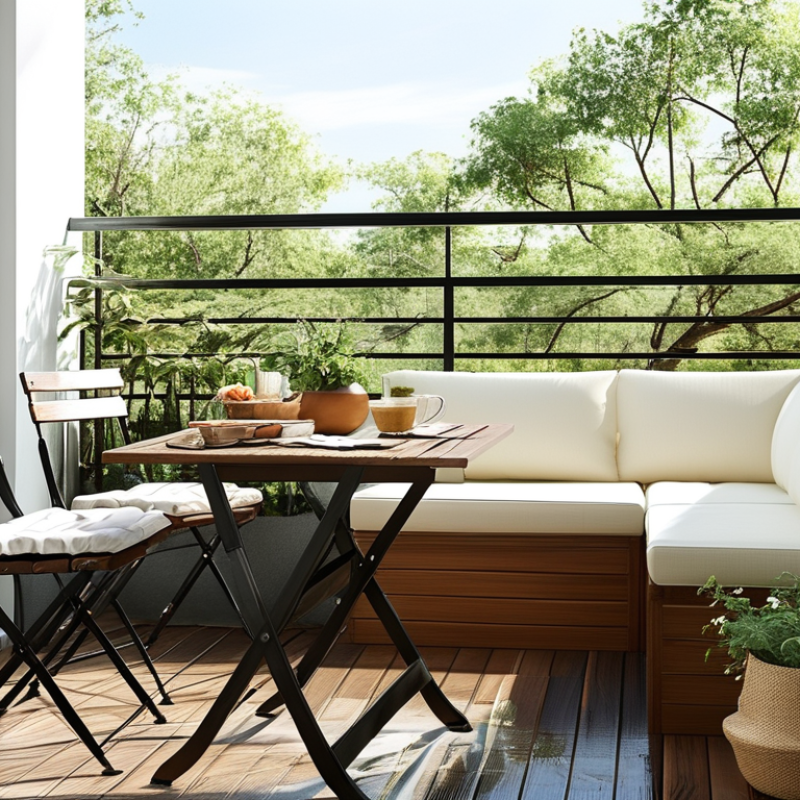
Top Balcony Furniture Sets for Small Spaces

Balcony Space Planning: Maintain 24–36 Inches of Clear Walking Space

Top Balcony Furniture Sets for Small Spaces

A small balcony needs a walking path before it needs more furniture. Measure the usable floor area, including the door swing. Keep 24–36 inches of clear walking space from the doorway to the railing. This width lets most adults pass without turning sideways. It also leaves room for carrying groceries or watering plants. I once placed a chair too close to a sliding door. It looked attractive, but daily movement became awkward.

Choose compact furniture with a narrow profile and practical proportions. A two-seat bistro set can work well when its table stays under 24 inches wide. Folding chairs create flexibility during cleaning or visits. Stackable stools can provide extra seating without permanently blocking the path. Check the chair depth, not only its width. A deep seat may reduce circulation more than expected. Leave several inches between furniture edges and railings when possible.

Mark the proposed layout with painter’s tape before buying anything. Walk through it with the door fully open. Then test it while carrying a tray. This small experiment often reveals problems that a floor plan misses. Weather-resistant materials matter, but drainage matters too. Avoid placing furniture where pooled water can reach cushions or metal joints. My own layout still feels slightly crowded near one corner, and I may replace the table with a smaller folding surface. That is an honest trade-off. A clear route is more useful than a perfect-looking arrangement.

Furniture Set Types: Compare Bistro, Loveseat, and Modular Footprints

Top Balcony Furniture Sets for Small Spaces

Furniture Set Types: Compare Bistro, Loveseat, and Modular Footprints

A bistro set usually offers the smallest footprint, often fitting balconies under 1.2 metres wide. Its two chairs and compact table support morning coffee without blocking the door. A loveseat creates a calmer, more comfortable layout, but its fixed width can restrict movement. Choose it when the balcony is longer than it is deep. Modular seating provides the most flexibility. Separate corner, armless, and ottoman pieces can follow an awkward railing or narrow wall.

Grand View Research estimated the global outdoor furniture market at about USD 23.7 billion in 2023. This growth reflects rising demand for usable outdoor living areas, including compact urban spaces. Still, market growth does not guarantee good balcony design. Measure every piece, including chair backs and table edges. In practical layout tests, a 5-centimetre error can make a door strike the furniture. I sometimes underestimate walking clearance, especially with modular pieces. That mistake is easy to repeat.

Tips: Keep at least 60 centimetres for the main walking route. Select folding tables when daily access matters. Use lightweight materials for seasonal rearranging. Check the balcony’s load guidance before adding heavy planters or storage. The International Casual Furnishings Association also advises assessing weather exposure, drainage, and maintenance needs before buying outdoor seating. A beautiful set can fail quickly under constant sun and rain.

Top Balcony Furniture Sets for Small Spaces

Comparing typical assembled footprints for bistro, loveseat, and modular furniture sets.

How to read the chart: Bistro sets use the least floor space and are best for narrow balconies. Loveseat sets provide more seating while maintaining a compact footprint. Modular sets offer the most seating flexibility but require substantially more space. Footprints are calculated from representative assembled dimensions: width × depth ÷ 144.

Material Performance: Evaluate Aluminum, Teak, and HDPE Weather Resistance

For a compact balcony, material choice matters as much as the folding design. Aluminum frames are light, rust-resistant, and easy to move when storms approach. Powder-coated surfaces usually handle rain and sun well, but scratches can expose weaker metal. Salt air is less forgiving. Check joints, drainage holes, and fasteners every few months. Cheap hardware may stain or seize before the frame fails. That detail is easy to miss. Use furniture feet that protect tile and allow trapped water to escape.

Teak offers a warmer look and strong outdoor performance because its natural oils resist moisture. Yet it is not maintenance-free. Unsealed teak gradually turns silver, while repeated soaking may encourage surface checking. Keep it elevated, wipe spills, and inspect end grain for splitting. HDPE is practical for exposed balconies. It does not absorb water, resists insects, and tolerates frequent cleaning. Darker colors can become noticeably hot under direct summer sun. Allow airflow beneath cushions. In a small space, that matters.

Material tests are useful, but balcony conditions vary sharply. I would not choose solely by a showroom sample. Measure wind exposure, afternoon heat, and winter moisture before buying. One overlooked issue remains: moving parts often weather faster than solid panels. I learned that the hard way.

Safety Standards: Check Balcony Loads Against the 60-psf IBC Benchmark

For a small balcony, furniture selection begins with structural safety, not style. The 2021 International Building Code, Table 1607.1, commonly produces a 60-psf residential balcony benchmark. This figure comes from applying a 1.5 multiplier to a 40-psf dwelling live load. It is a design reference, not automatic permission to add heavy furniture.

Think in total weight. A 40-square-foot balcony reaches 2,400 pounds at 60 psf, including occupants, furniture, planters, stored water, and snow where applicable.

A compact metal table may seem light, but wet soil can add surprising weight. Large planters also create concentrated loads, unlike evenly distributed seating. Keep heavy items near structural walls, and avoid stacking them along one edge.

Use the ICC code and ASCE/SEI 7-22 load provisions as professional references, then confirm local requirements with the building authority or a licensed structural professional. Balcony age, materials, drainage, corrosion, and attachment details can change the real capacity. Never treat a product label as proof of structural safety. I have seen homeowners count only chairs and forget people. That mistake is easy to make. It is also exactly why a simple floor plan, item weights, and a conservative review matter before choosing a small balcony set.

Buying Criteria: Assess ASTM Fabrics, Drainage, Ergonomics, and Warranties

A small balcony needs furniture that handles weather without feeling oversized. Start by checking the fabric’s ASTM test information, not just a vague “outdoor-rated” label. ASTM standards describe test methods, but they do not automatically prove long-term performance. Ask which standard was used, what was tested, and whether the results cover colorfastness, abrasion, or mildew resistance. A fabric sample should feel tightly woven, dry quickly, and resist snagging from zippers or rough walls. Do not ignore the seams. Weak stitching can fail before the fabric does.

Drainage matters after a hard rain. Look for slatted frames, open-weave surfaces, and cushions with mesh panels or drainage channels. Thick foam may feel luxurious, yet it can stay damp inside. That creates odors and shortens its useful life. Measure the balcony slope and check that water will not collect beneath the set. Ergonomics is equally practical: seat depth, back angle, armrest height, and table clearance should support relaxed use without blocking the door. Sit for several minutes if possible. A chair can look elegant and still pressure your knees.

Read the warranty line by line. Confirm coverage for the frame, fabric, fasteners, and finish separately. Check exclusions for standing water, salt air, fading, misuse, and normal wear. Keep receipts and care instructions. My own mistake was trusting a broad warranty headline; the fine print covered only structural breaks. That changed how I compare furniture. Claims procedures, replacement parts, and response times deserve attention too.

Top Balcony Furniture Sets for Small Spaces - Buying Criteria: Assess ASTM Fabrics, Drainage, Ergonomics, and Warranties

Representative, brand-neutral comparison profiles. Confirm the exact product documentation, dimensions, and warranty terms before purchase.
Set Profile Best Balcony Size Furniture Configuration Overall Footprint Seat Height / Depth Fabric and ASTM Evidence to Check Drainage Design Ergonomic Assessment Typical Load Rating Warranty Target
Compact Bistro Set Very small balconies, approximately 35–50 sq. ft. Two armless chairs and a round or square café table Table: about 24–28 in. wide; chairs: about 20–22 in. wide each Seat height: 17–19 in.; seat depth: 16–18 in. Solution-dyed polyester or olefin; request seam-strength, tear-strength, and UV-exposure test information. ASTM test methods may include D5034, D2261, and G154. Slatted tabletop and open chair frames; cushions should have mesh or perforated undersides. Good for short meals; armless design saves space but offers less shoulder support. At least 250 lb per chair and 50 lb distributed on the table At least 1 year for frame and manufacturing defects
Folding Balcony Set Rental apartments or balconies requiring frequent clearance Two folding chairs and one folding table Open footprint: about 24–30 in. deep by 42–50 in. wide Seat height: 17–18 in.; seat depth: 15–17 in. Textilene or woven polyester may dry quickly; verify UV resistance, seam construction, and fabric attachment under an applicable ASTM test report. Mesh seating and perforated or slatted tabletop reduce standing water. Convenient for temporary use; check that locking hinges do not interfere with legroom. At least 250 lb per chair; table rating should be clearly stated At least 1 year; hinge and locking-mechanism coverage is preferable
Slim Loveseat Set Medium-small balconies, approximately 50–70 sq. ft. One compact loveseat, one narrow side table, and removable cushions Loveseat: about 42–48 in. wide and 25–30 in. deep Seat height: 17–19 in.; seat depth: 19–22 in. Solution-dyed acrylic or olefin is suitable for outdoor exposure; ask for colorfastness and UV-test documentation rather than relying only on the term “outdoor fabric.” Cushion covers should use quick-drain mesh, piped seams, and a foam core designed for outdoor airflow. Best comfort for reading; a slightly angled back and 19–22 in. seat depth support longer sitting. At least 300 lb per seat At least 1 year for frame; 2 years is preferable for cushions and fabric
Stackable Dining Set Balconies used for meals, approximately 60–80 sq. ft. Two stackable dining chairs and a narrow rectangular table Table: about 28–36 in. wide by 24–30 in. deep Seat height: 17–19 in.; seat depth: 16–19 in. Look for abrasion, tear, seam, and UV test results relevant to the actual fabric construction; ASTM methods are test procedures, not a standalone fabric grade. A table with slats or drainage gaps is preferred; avoid sealed recesses that trap water. Dining-friendly posture requires a supportive back, sufficient knee clearance, and a table height near 28–30 in. At least 275 lb per chair; table should support at least 75 lb distributed At least 1 year; stacking hardware should be included in coverage
Cushion-Free Metal Set Wet or exposed balconies where easy maintenance is important Two perforated metal chairs and one compact metal table Table: about 24–30 in. wide; chairs: about 20–23 in. wide each Seat height: 17–19 in.; seat depth: 16–18 in. No upholstered fabric to evaluate; inspect powder-coat adhesion, corrosion resistance, and any applicable coating or finish test documentation. Perforated seats and tabletop provide the fastest drainage and simplest cleaning. Firm seating is upright and supportive but may need separate cushions for extended use. At least 250 lb per chair At least 1 year; corrosion-related exclusions should be reviewed carefully
Storage-Integrated Set Small balconies needing concealed cushion storage Compact bench, two stools, and a lift-top or compartment table Bench: about 40–48 in. wide; table depth: about 20–26 in. Seat height: 17–19 in.; seat depth: 17–20 in. For cushions, verify UV, tear, and seam performance; storage panels should not be presented as proof of weatherproof fabric performance. Storage compartments need raised bases, ventilation openings, and drainage paths that do not direct water toward cushions. Efficient use of space; verify lid clearance and that the bench height allows comfortable knee angles. At least 300 lb for the bench; at least 200 lb per stool At least 1 year; hardware, hinges, and storage panels should be covered
Buying note: ASTM references identify standardized test methods and should be matched to the actual material, construction, and intended outdoor use. Prioritize documented test results, open drainage paths, a seat depth that matches the intended activity, clearly stated weight limits, and written warranty exclusions.

FAQS

: How much walking space should a small balcony have?

: Keep 24–36 inches of clear space between the doorway and railing. Keep it clear. This route should remain usable while carrying groceries or watering plants.

What furniture set fits a narrow balcony best?

A compact bistro set often fits balconies under 1.2 metres wide. Choose a table narrower than 24 inches. Two chairs can support coffee without blocking the doorway.

Is a loveseat suitable for a small balcony?

A loveseat works better when the balcony is longer than it is deep. Its fixed width may restrict movement. Measure the full frame, including armrests and chair backs.

When should I choose modular seating?

Modular seating helps with awkward corners, narrow walls, and unusual railings. Separate pieces can be rearranged as needed. I sometimes underestimate its total footprint.

How can I test a furniture layout before buying?

Mark the proposed positions with painter’s tape. Open the door fully. Walk through while carrying a tray. This test may reveal problems that measurements miss.

What details matter beyond furniture width?

Check chair depth, table edges, door movement, and railing clearance. A deep seat can reduce walking space unexpectedly. A five-centimetre error may cause a door strike.

How should I consider weather and drainage?

Select materials suited to sun and rain. Keep furniture away from pooled water. Wet cushions and rusty joints create avoidable maintenance problems. Drainage matters too.

How much weight can a balcony safely hold?

Do not assume a general load figure guarantees safety. Count people, furniture, planters, wet soil, stored water, and snow where relevant. A 40-square-foot balcony rated at 60 psf represents 2,400 pounds total design load. That is not permission to add 2,400 pounds.

Where should heavy planters or storage go?

Keep heavy items near structural walls when permitted. Avoid placing several heavy objects along one edge. Confirm local requirements with the building authority or a qualified structural professional. When uncertain, remove weight.

Conclusion

Choosing the right Balcony Furniture Sets for a small outdoor area begins with careful space planning. Keep 24–36 inches of clear walking space so the balcony remains comfortable and accessible. Bistro sets are ideal for compact layouts, while loveseats provide more seating with a moderate footprint. Modular furniture offers flexibility, allowing pieces to be rearranged as needs change. Consider materials based on local weather conditions: aluminum is lightweight and corrosion-resistant, teak offers natural durability, and HDPE provides reliable resistance to moisture and fading.

Safety should also guide every purchase. Check the balcony’s permitted load and compare it with the 60-psf IBC benchmark, while recognizing that building-specific requirements may differ. For long-term comfort and value, evaluate ASTM-tested fabrics, effective drainage, supportive ergonomics, and clear warranty coverage. A well-selected set should balance proportion, durability, safety, and easy maintenance without overcrowding the space.


Oliver

Oliver

Oliver is a seasoned marketing professional with a wealth of expertise in driving brand awareness and engagement. With a deep understanding of our company's product offerings, he consistently delivers high-quality content that enriches our professional blog. His insights not only shed light on......