A small balcony can become a useful outdoor room with the right Balcony Furniture. The challenge is not simply finding attractive chairs. It is balancing circulation, weather exposure, storage, comfort, and safety within a narrow footprint. A 60-centimeter-deep bistro chair may fit comfortably, while a deep lounge seat can block the doorway. Measure the usable floor area first. Then note railing height, drainage points, sunlight, and wind direction.
Industry data supports the growing importance of outdoor living. Grand View Research reports that the global outdoor furniture market was valued at approximately USD 19.8 billion in 2022, with continued growth expected through 2030. Fortune Business Insights also identifies residential outdoor spaces as a major demand area in its outdoor furniture market analysis. However, these reports rarely separate balconies from patios or gardens. That limitation matters. It means small-space buyers need practical judgment, not only market forecasts.
This guide examines compact tables, folding chairs, stackable stools, storage benches, and vertical planters. Materials deserve equal attention. Powder-coated aluminum resists rust, while treated wood needs periodic maintenance. Removable cushion covers are useful after sudden rain. A narrow wall-mounted table can preserve walking space. Fold it down when the balcony becomes a laundry area.
Keep the layout breathable. Leave a clear route to the door. Do not overload the railing. A beautiful arrangement can still feel inconvenient. In real homes, furniture often moves between seasons, cleaning days, and unexpected guests. The best solution may not be the most stylish one. It should remain stable, comfortable, and easy to store.
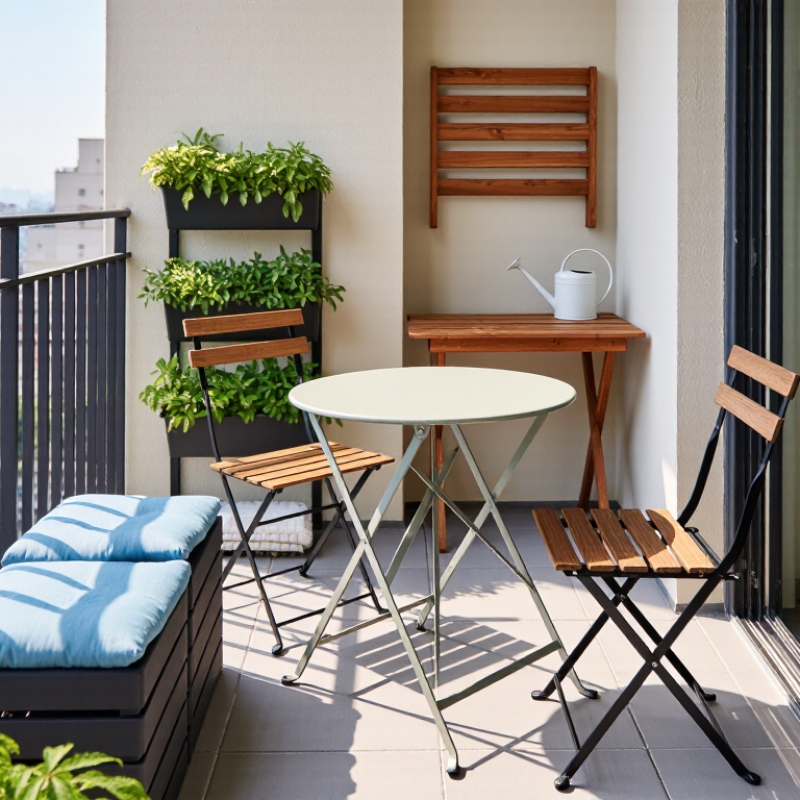
A small balcony needs accurate measurements before furniture shopping begins. Measure the floor length, width, ceiling height, and door swing. Record these numbers.
Mark fixed features such as railings, drains, vents, and wall-mounted equipment. A narrow bistro table may fit, but its chairs could block the doorway. Leave a clear walking path of at least 60 centimeters where possible. Folding furniture can improve access, though it may become annoying when used daily.
Weight limits deserve careful attention. Check your building documents or ask the property manager for the balcony’s permitted load. Include furniture, people, planters, stored items, and wet soil in your estimate. Weight spread across the floor is usually safer than one heavy planter in a corner, but structural advice should come from a qualified professional.
Do not rely on appearance alone. I once chose a compact metal chair that looked harmless, yet it felt unstable on a slightly uneven floor. That mistake changed my approach. I now test chair legs, measure seat clearance, and check whether wind can move lightweight pieces. Soft cushions also need secure storage during storms. A simple sketch helps reveal problems before delivery, although my sketches are rarely perfect. Build around real movement, not just attractive photos.
Top Balcony Furniture Ideas for Small Spaces
Choosing Compact Furniture for Comfort and Practicality
Measure the balcony before buying anything. Check the doorway, railing, and walking space carefully. Measure twice. A compact bistro table can provide meals without blocking movement. Choose one with a narrow profile and rounded edges. Two lightweight chairs are usually more flexible than a fixed bench. Foldable designs help when you need space for cleaning or drying clothes.
Comfort still matters in a small outdoor area. Select chairs with supportive backs and seats deep enough for relaxed use. Thin cushions can improve comfort, but they should dry quickly after rain. Look for weather-resistant materials, rust-protected hardware, and surfaces with simple drainage. Keep it breathable. Trapped moisture can leave unpleasant marks on both furniture and flooring.
Vertical storage can hold gardening tools, cushions, or small lanterns without using valuable floor space. A slim storage box may also serve as an extra seat, but confirm its weight capacity first. I once placed a large chair on a narrow balcony and ignored the opening door. The chair looked attractive, yet daily use became frustrating. My first layout was not practical. Leave enough clearance to turn, sit, and carry a cup safely. Soft colors can make the balcony feel larger, while one textured cushion adds warmth without creating visual clutter.
Top Balcony Furniture Ideas for Small Spaces
Planning a Space-Saving Balcony Furniture Arrangement
A small balcony needs a measured plan, not a crowded collection of furniture. Measure the floor, railing height, door swing, and walking path before buying anything. Leave at least 60 centimeters for comfortable movement when possible. In my experience, a narrow folding table works better than a deep dining table. Place it against the wall or railing, then add two lightweight chairs that can fold flat. The arrangement feels open, even during breakfast or evening reading.
Choose furniture with more than one function. A storage bench can hold cushions, gardening tools, or folded blankets. Stackable stools provide extra seating without blocking the doorway. Soft outdoor cushions add comfort, but they should dry quickly after rain. Avoid placing heavy items near the railing unless they are stable and safely designed for outdoor use. I once arranged a balcony too tightly, and opening the door became awkward. It looked attractive, but daily use exposed the mistake.
Tips: Keep the tallest furniture near the least-used corner. Use one color family to reduce visual clutter. Hang small planters instead of filling the floor. Test the layout with cardboard boxes first. Check wind exposure before adding lightweight pieces. A little empty space matters. Reconsider the plan after one week of use, because real habits often differ from the original sketch.
| Balcony Size | Space-Saving Furniture Arrangement | Recommended Furniture Dimensions | Seating Capacity | Useful Features | Suggested Clearance | Best Layout Position |
|---|---|---|---|---|---|---|
| Very Small Up to 35 sq. ft. |
One folding bistro table with two folding chairs | Table: approximately 24–28 in. wide Chairs: 17–20 in. wide each |
1–2 people | Foldable seating, wall-mounted hooks, and a narrow vertical planter | At least 24 in. for the main walking path | Place the table against the railing or side wall and fold the chairs when not in use |
| Narrow 36–50 sq. ft. |
Compact bench along one wall with a slim café table | Bench depth: 16–20 in. Table depth: 18–24 in. |
2–3 people | Bench storage, removable cushions, and a small nesting side table | 24–30 in. along the opposite side | Run the bench lengthwise along the longest wall to preserve the central walkway |
| Square 51–75 sq. ft. |
Two compact lounge chairs with a round folding table | Chairs: 24–28 in. wide each Table diameter: 24–30 in. |
2 people | Lightweight frames, stackable stools, and a round tabletop with no sharp corners | 30 in. between furniture pieces | Position the chairs at adjacent sides and keep the entry area unobstructed |
| Medium 76–100 sq. ft. |
Compact outdoor loveseat with a narrow coffee table | Loveseat width: 42–54 in. Table depth: 18–24 in. |
2–3 people | Lift-top storage, weather-resistant cushions, and a slim side table | 30–36 in. in front of the loveseat | Place the loveseat against the solid wall and use the remaining side for plants or storage |
| Long and Deep 101–150 sq. ft. |
One compact dining set with a narrow rectangular table | Table: 36–48 in. long and 24–30 in. deep Chairs: 17–20 in. wide |
2–4 people | Drop-leaf table, folding chairs, and wall-mounted lighting | 36 in. behind chairs where possible | Place the dining zone at one end and maintain a clear route from the door to the railing |
| Flexible Multi-Use Any compact size |
Folding chairs paired with a wall-mounted or railing-height table | Fold-down table depth: 16–22 in. Chair width: 17–20 in. |
1–2 people | Fold-flat storage, adjustable tabletop, and multipurpose seating | 24–30 in. when furniture is opened | Install the table on the least-used wall and store folded chairs vertically |
| Plant-Focused Balcony Any compact size |
One narrow bench with vertical gardening instead of floor planters | Bench depth: 16–20 in. Plant shelf depth: 8–12 in. |
1–2 people | Tiered shelves, railing planters, drainage trays, and storage beneath the bench | Keep at least 24 in. clear beside the bench | Use vertical wall space for greenery and keep floor-level planting limited to corners |
Planning note: Measure the balcony’s usable floor area, doorway swing, railing height, and drainage points before purchasing furniture. Always confirm the balcony’s permitted load limits and building regulations before adding heavy furniture, planters, or storage units.
A small balcony can work harder with vertical storage and flexible decorative features. The 2024 Houzz U.S. Outdoor Trends Study reports that homeowners increasingly treat outdoor areas as extensions of indoor living spaces. This supports a practical shift: use walls and railings, not only floor space. A narrow ladder shelf can hold herbs, folded cushions, and small tools. Wall-mounted hooks keep watering cans off the floor. Choose weather-resistant materials and check load limits before fixing anything overhead.
Tips: Measure twice. Keep one clear walking route. Use stackable stools, foldable tables, and planters with removable liners. A slim storage bench adds seating, but it may become uncomfortable in direct sun. I learned this the hard way. Shade matters more than appearance during hot afternoons. The Environmental Protection Agency notes that urban areas can be several degrees warmer than nearby surroundings, making balcony ventilation and light-colored surfaces useful design choices.
Flexible decoration should change with the season. Hang lightweight fabric panels for privacy, then remove them during strong winds. A vertical trellis can support plants while softening hard walls. According to the National Association of Home Builders’ 2024 buyer preferences research, outdoor living features remain highly valued by many homeowners. However, a balcony is not a patio. Avoid overcrowding it. Leave space for drainage, inspection, and emergency access. Small imperfections are acceptable; unsafe clutter is not.
Small balconies can feel inviting with a compact chair, a folding table, and soft outdoor cushions. Yet changing weather often causes more damage than limited space. Rain settles beneath furniture legs, while strong sunlight fades fabric and dries wooden surfaces. Good maintenance keeps these pieces useful for longer.
I once left a chair outside during several wet days. Its metal joints developed rust before I noticed. Now, I inspect screws, hinges, and feet every week. I wipe off dust with mild soapy water, then let each item dry completely. Never store damp cushions in a box. Trapped moisture can create mildew and unpleasant odors. A breathable cover helps, but it should not touch wet furniture.
Seasonal changes require small adjustments. Before heavy rain, move lightweight pieces away from balcony edges. Secure them safely, but avoid blocking drainage paths. During hot months, use shade during the strongest afternoon sunlight. Wooden furniture may need a suitable protective treatment, while plastic pieces still require cleaning. I sometimes forget the underside of tables. That is where grime quietly collects. Check fabric seams, too. Loose stitching can worsen after one windy night. If a surface begins peeling or cracking, repair it early rather than waiting for visible failure. My earlier habit was to clean only when guests visited, and that was clearly not enough.
Measure the floor, doorway, railing, and walking route. Measure twice. Leave space to turn and carry a cup safely.
Choose a narrow table with rounded edges. It can hold two plates without blocking movement.
Often, yes. Two lightweight folding chairs are easier to move, store, and remove during cleaning.
Select chairs with supportive backs and sufficiently deep seats. Thin cushions add comfort, but they must dry quickly.
Look for weather-resistant surfaces, rust-protected hardware, and simple drainage. Breathable construction reduces moisture marks and odors.
Use vertical storage for tools, cushions, or lanterns. A slim storage box may become a seat. Check its weight limit.
Inspect screws, hinges, and feet weekly. Wipe dust with mild soapy water. Dry everything completely before storing it.
Use shade during intense afternoon sunlight. Treat suitable wooden surfaces when needed. Clean plastic furniture regularly, too.
Do not ignore the opening door or drainage paths. I once chose an attractive chair that made daily movement frustrating. My layout failed.
Repair peeling surfaces, cracks, loose stitching, or rusty joints early. Waiting for obvious failure usually makes the problem worse.
Creating a comfortable balcony in a small space begins with understanding its size, layout, and weight limits. Measure the available area carefully, note doors and railings, and choose compact Balcony Furniture that offers both comfort and practical use. Foldable chairs, slim tables, benches with hidden storage, and lightweight pieces can help preserve movement while making the space more functional.
A well-planned arrangement should keep pathways clear and place larger items against walls or corners. Vertical shelves, hanging organizers, and wall-mounted features can provide extra storage without taking up valuable floor space. Flexible decorations, such as removable cushions, outdoor textiles, and movable planters, allow the balcony to change with the seasons. Finally, protect Balcony Furniture from changing weather by selecting suitable materials, using covers when needed, improving drainage, and cleaning surfaces regularly. With thoughtful planning and consistent care, even a compact balcony can become an inviting, organized, and durable outdoor retreat.

JIANGYIREN Furniture